
Last Updated: November 5, 2026
Quick Summary
To learn fly fishing, start with a simple, balanced setup such as a 5- or 6-weight rod matched to line of the same weight. Then practice the overhead, false, and roll casts on a lawn before fishing, and tie your leader and tippet knots at home.
- Match the fly line weight to the rod's listed weight for a balanced starter setup.
- Pause at the top of the back cast until the line straightens behind you.
- Practice the basic overhead cast on a lawn with 20 to 30 feet of line.
- Learn knots like the improved clinch and surgeon's knot at home before fishing.
- Take a local beginner class or use loaner gear to speed up learning.
Table of Contents
- Start With the Right Fly Fishing Setup for Beginners
- Learn the Casting and Rigging Steps in Order
- How to Fly Fish for Trout as a Beginner
- Use Classes and Videos to Speed Up Your Learning
- Frequently Asked Questions
Start With the Right Fly Fishing Setup for Beginners
Learning how to learn fly fishing starts with the right gear, not the fanciest gear. A simple, balanced setup lets the rod load and the line turn over without fighting the tackle.
Fly fishing uses a weighted line to cast a lightweight artificial fly. The rod does most of the work, so a good starter setup matters more than an expensive one.
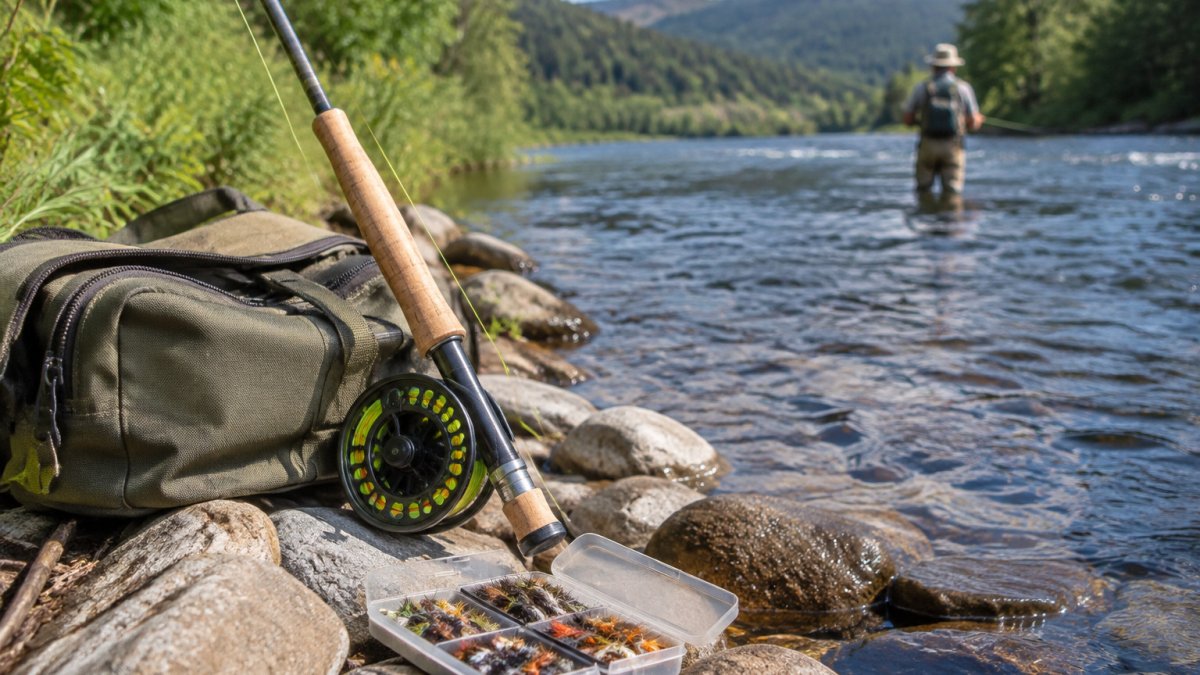
Your starter setup includes:
- A 5- or 6-weight rod, 8 to 9 feet long (versatile for trout and small bass)
- A reel with a smooth drag, at beginner level it mostly stores line, so spend here last
- Weight-forward floating fly line matched to the rod weight
- A 9-foot tapered leader (4X or 5X) and a spool of tippet
- A small fly box with dry flies and nymphs
- Nippers, forceps, and a landing net
Match the line to the rod, not the reel. The number on the rod is the line weight it is designed to cast. A 5-weight rod with 5-weight line is the balanced starting point; mismatching them is the most common reason a beginner cast collapses.
Don't buy everything at once. Borrow gear when you can, and check whether a local fly shop rents or loans outfits for classes. A common mistake is spending heavily on a rod before you know what you enjoy.
Watch out: Buying a heavy, fast-action rod as a first rod makes learning to cast harder, because fast rods demand precise timing that beginners have not built yet.
Learn the Casting and Rigging Steps in Order
Casting is the foundation of everything else. Learn the mechanics: the rod loads (bends) against the line's weight on the back cast, then unloads forward to send the line out. If the line never loads, the cast collapses.
Follow this order:
- Practice the basic overhead cast on a lawn with a short line (about 20 to 30 feet)
- Learn the false cast to control line length and keep the line airborne
- Add the roll cast for close, tight spaces where a back cast is blocked
- Tie a basic leader-to-tippet knot (improved clinch or surgeon's knot)
- Rig a simple dry fly setup: leader to fly line via a loop-to-loop or nail knot, tippet to leader via a blood or surgeon's knot, fly to tippet via an improved clinch
Casting mechanics that matter:
- Pause at the top of the back cast until the line straightens behind you, most beginner timing errors come from starting forward too early.
- Keep the rod tip traveling in a straight line; an arcing tip makes wide, open loops.
- Accelerate smoothly and stop crisply on both stops.
- Let the line do the work; do not force it with the wrist.
Troubleshooting common problems:
- Tangles and tailing loops, usually from starting the forward cast before the back cast straightens, or too much power too early. Slow down and pause longer.
- Poor turnover (line lands in a pile), often a leader too long or too light for the fly. Shorten the leader or use heavier tippet.
- Snags on the back cast, move to a roll cast or reposition so the back cast has open space.
- Missed takes, usually too much slack between rod tip and fly. Strip in line to stay in contact.
Watch out: Skipping rigging practice often leads to lost flies and snapped tippets on the water. Tie knots at home until you can do them without looking.
The casting and rigging steps build on each other, and the most common beginner problems each have a clear cause and fix.
| Problem | Cause | Fix |
|---|---|---|
| Tangles and tailing loops | Forward cast started before back cast straightened | Slow down and pause longer |
| Poor turnover (line lands in a pile) | Leader too long or too light for the fly | Shorten the leader or use heavier tippet |
| Snags on the back cast | Not enough open space behind you | Use a roll cast or reposition |
| Missed takes | Too much slack between rod tip and fly | Strip in line to stay in contact |
How to Fly Fish for Trout as a Beginner
Trout are the most common target for new fly anglers, found in cold, clear streams and rivers across the United States.
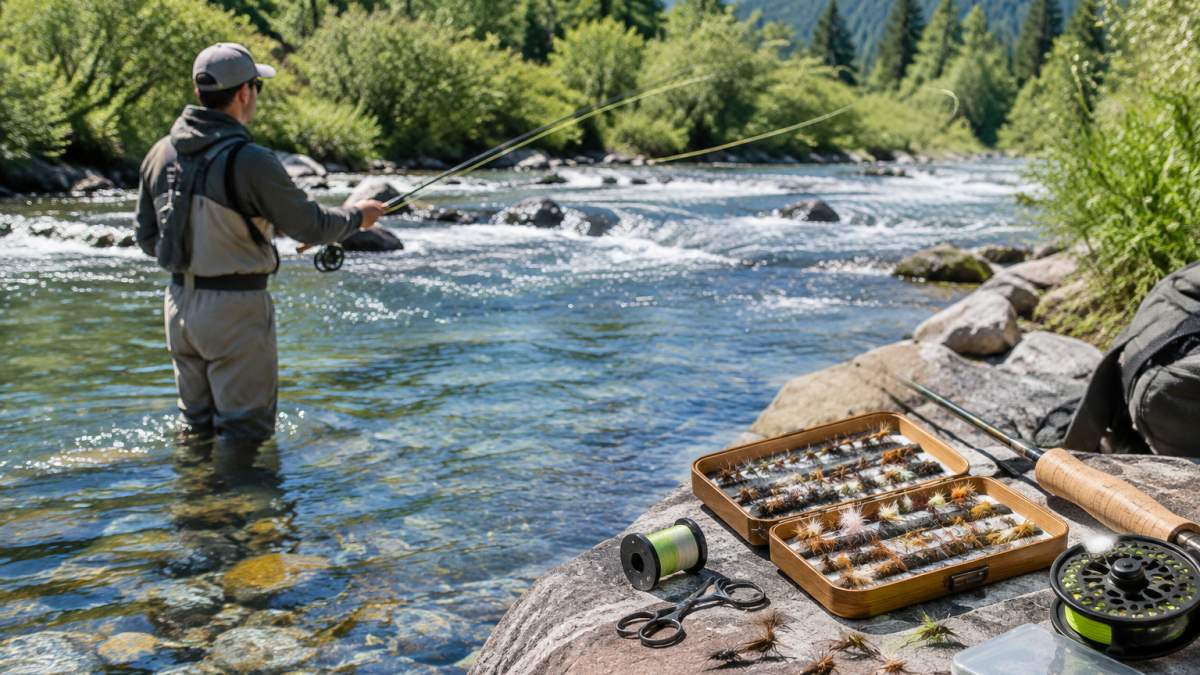
Start on a calm pool or slow riffle where you can see fish rising. Pick one fly, usually a dry fly, and cast it gently to the spot.
On the water, focus on:
- Reading where the current carries your fly
- Keeping slack out of the line so you feel strikes
- Setting the hook with a short, firm lift of the rod
- Handling fish quickly and releasing them unharmed
Safety matters too. Wear wading boots with good grip, check local fishing regulations before you go, and never wade into water faster than you can safely manage.
Use Classes and Videos to Speed Up Your Learning
Books and online videos help, but nothing replaces hands-on instruction. Many local fly shops and outdoor clubs offer beginner classes, often with loaner gear.
Video tutorials are useful for seeing casting motion and knot tying up close. Pause and repeat each step until you can copy it.
Get the most from lessons:
- Bring your own rod if you have one, so you can practice in class
- Ask the instructor to watch your cast and correct your form
- Take notes on one or two skills to practice each week
Frequently Asked Questions
Is fly fishing easy to learn?
Fly fishing has a steeper early curve than spin fishing, but most people become functional within a few sessions. Learning to read water, mend line and set the hook takes time and regular outings, and the basics are easier to build with simple, balanced gear.
How long does it take to learn to fly fish?
Fly fishing is a skill that develops with practice over time, and water reading tends to improve with every outing.
What gear do beginners need for fly fishing?
A beginner typically needs a rod, reel, fly line, leader, tippet, a small fly box, and basic tools. For current pricing and availability, visit the DonOmite LLC website or ask a local fly shop.
